


The Advantages of Liquid Color for Plastic Packaging and PET Bottle Manufacturing
In the plastic industry, especially in PET bottle manufacturing, choosing the right colorant is essential for product quality, efficiency, and cost-effectiveness. There are three main types of colorants used: liquid color, solid masterbatch, and powder pigment. Understanding the differences between these options and the advantages of liquid color can help manufacturers optimize their processes and achieve superior results.

Types of Colorants for PET Bottles
- Liquid Color – A pre-dispersed colorant in a liquid carrier, metered into the plastic melt during production. It provides excellent dispersion and consistency.
- Solid Masterbatch – A concentrated mix of pigments and additives encapsulated in a resin carrier, supplied in pellet form and blended with raw plastic. It requires more dosing and higher processing temperatures.
- Powder Pigment – A fine, dry pigment powder that is mixed with plastic resin. It requires extensive mixing to ensure uniform color distribution, which can be challenging in industrial applications.
Why Liquid Color is the Superior Choice
Liquid color technology offers several advantages over solid masterbatch and powder pigments, making it the preferred choice for PET bottle production.
- Superior Dispersion & Color Uniformity
-
- Liquid colors mix evenly within the plastic melt, eliminating streaks and inconsistencies. This ensures a smooth and vibrant final appearance without defects.
- Lower Dosing & Cost Efficiency
-
- Liquid colors typically require only 0.1–0.5% dosing, while solid masterbatches need 1–3% for the same effect. This leads to lower material consumption, cost savings, and reduced waste.
- Faster Color Changes & Reduced Downtime
-
- Switching colors in production lines is faster with liquid color, as it requires minimal purging compared to solid masterbatch. This reduces machine downtime and increases operational efficiency.
- Enhanced Customization & Special Effects
-
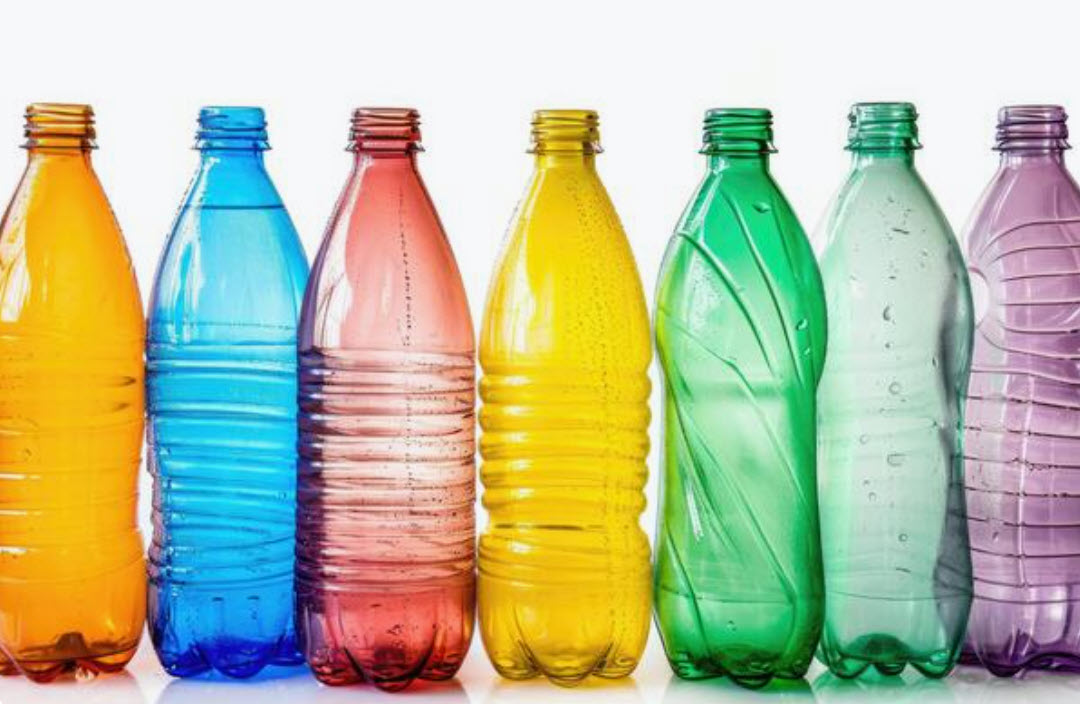
- Liquid colors allow for precise shade adjustments and can create various effects, such as metallic, pearlescent, or transparent finishes, offering more design flexibility.
- Sustainability & Environmental Benefits
-
- Liquid color solutions produce less waste and are compatible with recycled PET (r-PET), supporting eco-friendly manufacturing practices and reducing the carbon footprint.
- Integrated Additive Functionality
-
- Liquid color can incorporate performance-enhancing additives like UV stabilizers and optical brighteners, reducing the need for additional raw materials and simplifying the production process.
- Reduced Inventory Requirements
-
- With liquid color, a single base formulation can be adjusted on-site to create multiple shades, unlike solid masterbatch, which requires separate pellets for each specific color.
- Lower Energy Consumption
-
- Liquid color requires less heat for processing, reducing energy costs compared to solid masterbatch, which needs higher temperatures for proper dispersion.
For PET bottle manufacturers looking for efficiency, cost savings, and premium quality, liquid color is the best choice. It outperforms solid masterbatch and powder pigments in terms of color consistency, ease of use, sustainability, and operational efficiency. By adopting liquid color technology, manufacturers can streamline production, reduce waste, and create high-quality, visually appealing products.
Ventura Horizon Limited specializes in high-performance liquid color solutions, helping brands achieve superior results in PET bottle manufacturing. Contact us today to learn more about how our liquid color technology can enhance your production process.
Countries in the Middle East, Europe, and Africa
Middle East:
Saudi Arabia, United Arab Emirates, Qatar, Kuwait, Oman, Bahrain, Jordan.
Africa:
South Africa, Egypt, Nigeria, Kenya, Ghana, Morocco, Algeria, Tunisia, Tanzania, Angola, Uganda, Botswana, Namibia, Senegal, Ivory Coast, Mozambique, Zambia.
Europe:
United Kingdom, Germany, France, Italy, Spain, Netherlands, Belgium, Switzerland, Austria, Poland, Sweden, Norway, Denmark, Finland, Ireland, Portugal, Greece, Czech Republic, Hungary, Romania, Bulgaria, Slovakia, Slovenia, Croatia, Serbia, Bosnia and Herzegovina, Montenegro, North Macedonia, Albania, Estonia, Latvia, Lithuania.



Leave a Reply